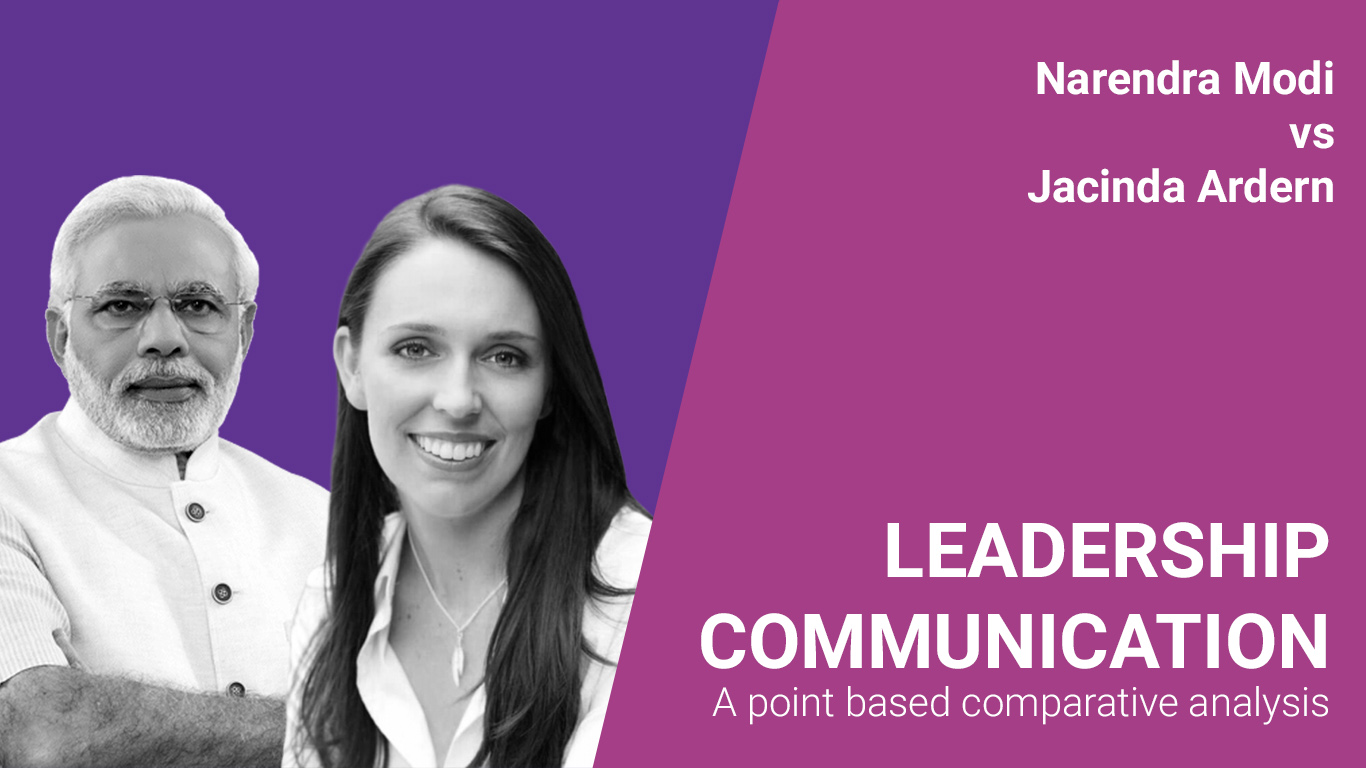
On 11 May 2020, Jacinda Ardern, the New Zealand PM addressed her nation regarding an update on the COVID-19 situation.
A day later, on the 12th of May 2020, the Indian PM Narendra Modi did the same for his country.
Even though I didn’t watch either of them live, I did view recordings of both their addresses and even went through the transcript in detail.
Narendra Modi addressed the nation in Hindi. Since am well familiar with the language, I viewed the recording in Hindi and reviewed the transcripts in both Hindi and English. Jacinda Ardern’s was obviously in English, so no confusion there.
As a communication professional, I love analyzing the speeches world leaders or company executives make. At times I learn a lot from how they communicate around an issue or matter, and at times I critically evaluate what they missed and what they could have done better.
The following blog post is a mix of both. It is a critical look into analyzing leadership communication by two well-respected world leaders.
It’s not always that we get different world leaders to talk about the same concern. But in this scenario when we do, it makes it easier to compare their communication effectiveness, especially in crisis periods.
It brings about a more balanced critique and ensures that we are not comparing apples to oranges.
I’ll be evaluating the whole of their address on a 50 point scale – 10 factors, evaluated against a score of 5. These factors have been taken into consideration based on the context of the existing crisis.
- First words
- Empathy
- Acknowledgment (of present scenario)
- Connecting with people
- Information
- Clarity
- Future actions
- Tone of voice
- Jargons (lack of)
- Call to action